Austin House Font: Adding Warmth to Small Business Branding
Last Tuesday, I found myself staring at a stack of plain white shipping boxes for a client’s new artisan candle line. The product inside was exceptional—hand-poured soy wax with complex, layered scents—but the exterior felt cold and generic. We had spent months perfecting the wax formula and sourcing sustainable packaging, yet the unboxing experience lacked that crucial human connection. As a creative consultant, I know that for small businesses, typography is often the bridge between a great product and a beloved brand. That afternoon, we decided to test Austin House, a handwritten font that promised to bring the exact kind of friendly, approachable personality the brand was missing.
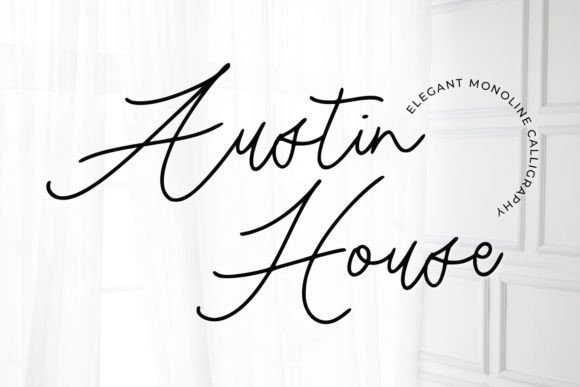
The result was an immediate shift in brand perception. Austin House isn't just another script amp font; it is a design tool that translates the feeling of a handwritten note into scalable digital and print assets. For business owners trying to move away from sterile, corporate aesthetics without sacrificing professionalism, this typeface offers a practical solution. It strikes a delicate balance between casual charm and legible clarity, making it surprisingly versatile for everything from product labels to social media graphics.
Why Handwritten Typography Matters for Customer Connection
In the world of e-commerce and boutique retail, customers are constantly seeking authenticity. They want to feel like they are buying from a person, not a warehouse. When we applied Austin House to the candle jar labels, the transformation was palpable. The font features organic curves and natural imperfections that mimic real penmanship, but unlike many messy display fonts, it maintains excellent readability at smaller sizes.
This legibility is critical for packaging design. A creative font looks beautiful on a mood board, but if customers cannot read the scent name or safety warning on a 3-inch label, it fails its commercial purpose. Austin House succeeds because the letterforms are distinct and open. During our testing phase, we printed samples on matte paper, glossy stickers, and textured cardstock. In every iteration, the characters remained crisp. This reliability makes it a trustworthy choice for entrepreneurs who need their branding to look polished across various physical touchpoints, including thank-you cards, tote bags, and hang tags.
Practical Applications Across Business Touchpoints
One of the strongest selling points of Austin House is its adaptability. While some handwritten fonts are too ornate for anything other than large headlines, this typeface works hard across multiple business applications. Here is how we utilized it during the rebrand:
- Product Packaging: We used Austin House for the primary product names and short descriptive phrases like "Hand-Poured" or "Small Batch." The friendly vibe reinforced the artisanal quality of the goods.
- Social Media Templates: Consistency is key for Instagram and Pinterest. We created quote templates using Austin House for inspirational text overlaid on lifestyle photography. The font’s relaxed style stopped the scroll without looking cluttered on mobile screens.
- Website Banners: For the online shop header, we paired the font with a clean sans serif. Austin House served as the emotional hook in the headline, while the supporting text provided necessary navigation clarity.
- Print Collateral: Business cards and postcards benefited from the font’s warmth. It turned standard contact information into something that felt like a personal invitation rather than a transactional exchange.
For service-based businesses like coaches, photographers, or bakers, this versatility is equally valuable. Imagine a bakery updating their menu board; Austin House can highlight daily specials or signature items, guiding the customer’s eye with a welcoming tone that encourages them to try something new. It transforms editorial design from a static list of prices into a curated experience.
Mastering Font Pairings for Professional Polish
A common mistake non-designers make when using script fonts is overusing them. To keep your brand identity professional, Austin House should be treated as a display font—the star of the show—rather than the workhorse. Effective modern typography relies on contrast. During the candle brand project, we established a strict hierarchy to ensure visual consistency.
We paired Austin House with a minimalist geometric sans serif for body copy, ingredients lists, and website navigation. This combination creates a sophisticated tension: the handwritten font provides emotion and personality, while the sans serif ensures utility and modern structure. Alternatively, for brands aiming for a more heritage or luxury feel, pairing Austin House with an elegant serif font can elevate the aesthetic, suggesting tradition and craftsmanship. The key is to let Austin House handle the headlines, logos, and accents, allowing your secondary typeface to manage the heavy lifting of information delivery. This strategy prevents visual fatigue and ensures your marketing materials remain accessible to all customers.
Technical Considerations for Commercial Use
Before integrating any new typeface into your business assets, it is vital to understand the technical specifications and licensing. Austin House typically comes with features that enhance its usability for commercial projects. When reviewing the font files, look for OpenType features such as ligatures and alternate characters. These allow you to customize connections between letters, preventing repetitive shapes and making the text flow more naturally, much like genuine handwriting.
Equally important is verifying the commercial license. If you plan to use Austin House on products for sale, such as t-shirt designs, mugs, or digital downloads intended for resale, ensure your license covers these specific uses. Standard desktop licenses often cover branding and marketing materials, but merchandise manufacturing may require an extended license. Always check the included file formats as well; having access to OTF, TTF, and WOFF files ensures you can use the font seamlessly across Adobe Illustrator, Canva, Cricut Design Space, and web platforms.
Elevating Brand Identity Through Thoughtful Design
Typography is one of the most cost-effective ways to upgrade a small business’s visual presence. After implementing Austin House, the candle brand reported that customers frequently commented on how "cute" and "personal" the packaging felt during unboxing. These small interactions build brand loyalty far more effectively than generic design ever could.
Whether you are refreshing a café menu, designing stickers for a craft fair, or building a cohesive Instagram grid, Austin House offers a blend of friendliness and functionality that is rare in the script amp category. It allows business owners to inject their unique personality into their brand identity without needing advanced calligraphy skills. By focusing on readability, strategic pairings, and proper licensing, you can leverage this creative font to create a memorable, professional, and deeply human brand experience that resonates with your audience. Good design is not just about looking pretty; it is about communicating value, and Austin House communicates warmth with remarkable efficiency.